Sunday, November 18, 2012

Up in new york hoping to meet Diane Di Prima.
wish me luck for i wish to study under her wing and learn how to perform and learn new things about alchemy.

Sunday, October 28, 2012

Green Lion

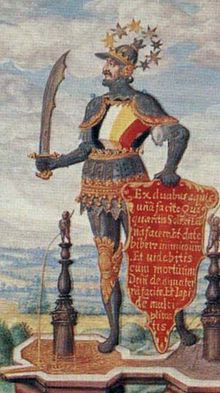
The lion symbolizes gold or the sun. The Green Lion swalling the sun is an alchemical symbol for gold being dissolved in a mixture of nitric and hydrochloric acids called ‘aqua regia’ (royal water).

---------------------

In alchemy, the green lion eats the sun. On a chemical level this is a metaphor for when a green, liquid sulfate called “vitriol” purifies matter, leaving behind the gold within the matter. Very pure vitriol is an acid that eats through practically anything, except gold.

On a human level, the green lion eating the sun is a metaphor for when a person’s “consciousness [is] overwhelmed by violent, frustrated desires” (Fabricus). In other words, inside a person, when the metaphor of the green lion eating the sun takes place, the person is compelled to act out destructively.

seems familiar

I've seen this before on a tomb stone. Greenwood Memorial Park.

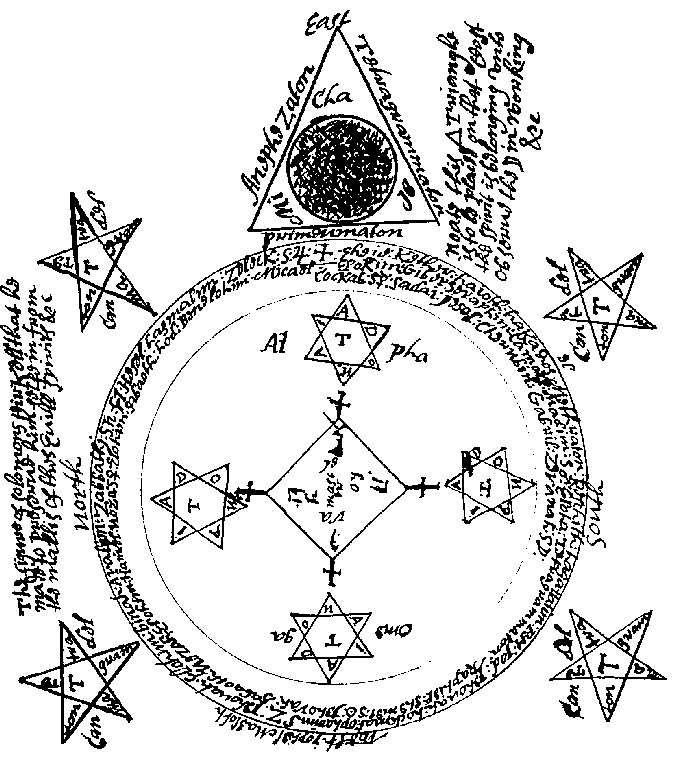
A transumation circle from Abramelin the mage

if any one can help translate this please do so.

Saturday, October 6, 2012

Alchemy - Sacred Secrets Revealed Part 8/8

Alchemy - Sacred Secrets Revealed Part 7/8

Alchemy - Sacred Secrets Revealed Part 6/8

Alchemy - Sacred Secrets Revealed Part 5/8

Alchemy - Sacred Secrets Revealed Part 4/8

Alchemy - Sacred Secrets Revealed Part 3/8

Alchemy - Sacred Secrets Revealed Part 2/8

Alchemy - Sacred Secrets Revealed Part 1/8

Magnum opus (alchemy)


The Great Work (LatinMagnum opus) is an alchemical term for the process of creating the philosopher's stone. It has been used to describe personal and spiritual transmutation in the Hermetic tradition, attached to laboratory processes and chemical color changes, used as a model for the individuation process, and as a device in art and literature. The magnum opus has been carried forward in new age and neo-hermetic movements which sometimes attached new symbolism and significance to the processes. It originally had four stages:[1][2]
  • nigredo, a blackening or melanosis
  • albedo, a whitening or leucosis
  • citrinitas, a yellowing or xanthosis
  • rubedo, a reddening, purpling, or iosis
The origin of these four phases can be traced at least as far back as the first century. Zosimus of Panopolis wrote that it was known to Maria the Jewess.[3] After the 15th century, many writers tended to compress citrinitas into rubedo and consider only three stages.[4] Other color stages are sometimes mentioned, most notably the cauda pavonis (peacock's tail) in which an array of colors appear.
The magnum opus had a variety of alchemical symbols attached to it. Birds like the raven, swan, and phoenix could be used to represent the progression through the colors. Similar color changes could be seen in the laboratory, where for example, the blackness of rotting, burnt, or fermenting matter would be associated with nigredo.


Elixir of life

The elixir of life, also known as elixir of immortality and sometimes equated with the philosopher's stone, is a legendary/mythicalpotion, or drink, that grants the drinker eternal life and/or eternal youth. Many practitioners of alchemy pursued it. The elixir of life was also said to be able to create life. It is related to the myths of Thoth, and Hermes Trismegistus, all of whom in various tales are said to have drunk "the white drops" (liquid gold) and thus achieved immortality. It is mentioned in one of the Nag Hammadi texts.[1]As water is a very important resource in our lives it is known as the elixir of life.

Alchemist


An alchemist is a person versed in the art of alchemy. Western alchemy flourished in Greco-Roman Egypt, the Islamic world during the Middle Ages, and then in Europe from the 13th to the 18th centuries. Indian alchemists and Chinese alchemists made contributions to Eastern varieties of the art. Alchemy is still practiced today by a few, and alchemist characters still appear in recent fictional works and video games.
A large number of alchemists are known from the thousands of surviving alchemical manuscripts and books. Some of their names are listed below. Due to the tradition of pseudepigraphy, the true author of some alchemical writings may differ from the name most often associated with that work. Some well-known historical figures such as Albertus Magnus and Aristotle are often incorrectly named amongst the alchemists as a result.

Revival and modern alchemists


Philosopher's stone

The philosopher's stone (Latinlapis philosophorum) is a legendary alchemical substance said to be capable of turning base metals(lead, for example) into gold (chrysopoeia) or silver. It was also sometimes believed to be an elixir of life, useful for rejuvenation and possibly for achieving immortality. For many centuries, it was the most sought-after goal in Western alchemy. The philosopher's stone was the central symbol of the mystical terminology of alchemy, symbolizing perfection at its finest, enlightenment, and heavenly bliss. Efforts to discover the philosopher's stone were known as the Magnum Opus.

The Philosopher's stone is created by the alchemical method known as The Magnum Opus or The Great Work. Often expressed as a series of color changes or chemical processes, the instructions for creating the philosopher's stone are varied. When expressed in colors, the work may pass through phases of nigredoalbedocitrinitas, and rubedo. When expressed as a series of chemical processes it often includes seven or twelve stages concluding in multiplication, and projection.

Equivalent Exchange


The mystical practice of alchemy to create objects out of raw matter or turn one object into another is widely believed to be capable of anything - indeed alchemy is often viewed as magical or miraculous by those unfamiliar with the craft - but it is a science and as such is subject to certain laws and limitations, all of which fall under the concept of Equivalent Exchange: "In order to obtain or create something, something of equal value must be lost or destroyed."
In standard practice, Equivalent Exchange is separated into two parts:
  • The Law of Conservation of Mass, which states that energy and matter can neither be created from nothing nor destroyed to the point of elemental nonexistence. In other words, to create an object weighing one kilogram, at least one kilogram of material is necessary and destroying an object weighing one kilogram would reduce it to a set of parts, the sum of which would weigh one kilogram.
  • The Law of Natural Providence, which states that an object or material made of a particular substance or element can only be transmuted into another object with the same basic makeup and properties of that initial material. In other words, an object or material made mostly of water can only be transmuted into another object with the attributes of water.

Alchemy


Alchemy (錬金術 Renkinjutsu) is, as it is understood in the Fullmetal Alchemistseries, the ancient metaphysical science/mystical art of manipulating and altering matter by using natural energy. This act is known as "Transmutation" and its sequence is usually described as:
  1. Comprehension - Understanding the inherent structure and properties of the atomic or molecular makeup of a particular material to be transmuted, including the flow and balance of potential and kinetic energy within.
  2. Deconstruction - Using energy to break down the physical structure of the identified material into a more malleable state so as to be easily reshaped into a new form.
  3. Reconstruction - Continuing the flow of energy so as to reform the material into a new shape.
The proper application of this craft requires not only a full understanding of chemistry and ancient alchemical theory, but also a sort of natural talent towards recognizing and manipulating the physical objects with energy, which require uncommon levels of intelligence and aptitude. Those remarkable individuals capable of studying and practicing alchemy are known as "Alchemists".
There are many paths by which alchemists can transmute the various substances of the world, with some alchemists being said to transmute by way of the Four Classical Elements (Water, Earth, Fire and Air) and some by way of the Three Essential Principles (salt, sulfur and mercury), but the basic tenet at the very foundation of all alchemy is that of Equivalent Exchange
The common transumation circle. The law of equivalent exchange to make something something of equal value must be lost.