Saturday, October 6, 2012
Philosopher's stone
The philosopher's stone (Latin: lapis philosophorum) is a legendary alchemical substance said to be capable of turning base metals(lead, for example) into gold (chrysopoeia) or silver. It was also sometimes believed to be an elixir of life, useful for rejuvenation and possibly for achieving immortality. For many centuries, it was the most sought-after goal in Western alchemy. The philosopher's stone was the central symbol of the mystical terminology of alchemy, symbolizing perfection at its finest, enlightenment, and heavenly bliss. Efforts to discover the philosopher's stone were known as the Magnum Opus.
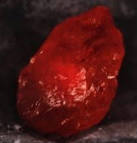 The Philosopher's stone is created by the alchemical method known as The Magnum Opus or The Great Work. Often expressed as a series of color changes or chemical processes, the instructions for creating the philosopher's stone are varied. When expressed in colors, the work may pass through phases of nigredo, albedo, citrinitas, and rubedo. When expressed as a series of chemical processes it often includes seven or twelve stages concluding in multiplication, and projection.

Subscribe to:
Post Comments (Atom)
No comments:
Post a Comment